

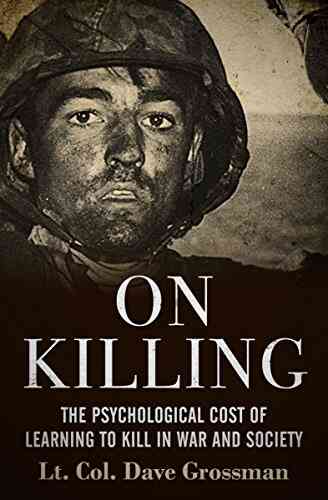
The Psychological Cost Of Learning To Kill In War And Society

War has an indelible impact on the human psyche. It shapes the way individuals perceive the world around them, altering their understanding of life and death. One of the most distressing consequences of war is the mental burden that soldiers bear when they learn to kill.
Killing other human beings is a fundamental violation of our natural instincts. From an early age, we are taught that killing is morally unacceptable, yet in the context of war, it becomes an essential part of the soldier's job. This detachment from our inherent morality can have profound psychological consequences.
While training for war, soldiers are exposed to a series of conditioning techniques designed to desensitize them to violence. These techniques aim to remove the natural inhibitions that prevent individuals from taking another person's life. By reducing the emotional and moral barriers, soldiers become more efficient killers on the battlefield.
4.7 out of 5
| Language | : | English |
| File size | : | 3783 KB |
| Text-to-Speech | : | Enabled |
| Screen Reader | : | Supported |
| Enhanced typesetting | : | Enabled |
| X-Ray | : | Enabled |
| Word Wise | : | Enabled |
| Print length | : | 339 pages |
| Lending | : | Enabled |
However, once the killing becomes a reality, the psychological toll can be overwhelming. Many soldiers experience deep remorse and guilt for their actions, struggling to reconcile their wartime deeds with their pre-war selves. This internal conflict can lead to various mental health issues, including post-traumatic stress disorder (PTSD).
In times of war, societies must grapple with the consequences of training individuals to kill. The profound changes in an individual's psyche can have far-reaching impacts on society as a whole. Generations of soldiers have returned home from war, carrying the psychological scars of their experiences.
The ripple effect of war-related trauma extends beyond the battlefield. Families struggle to support soldiers who return home burdened with guilt and emotional distress. Communities bear the brunt of mental health issues, facing increased rates of suicide, substance abuse, and domestic violence.
Recognizing the psychological cost of learning to kill is essential in developing strategies to support soldiers both during and after their service. Mental health services need to be readily available to help soldiers cope with their wartime experiences and reintegrate into society. Strong support systems can help mitigate the long-lasting effects of war trauma.
In addition to aiding veterans, society as a whole must engage in a critical examination of the ethical implications of training individuals to kill. By understanding the psychological toll of war, we can work towards minimizing conflicts and seeking peaceful resolutions to conflicts.
Furthermore, education and awareness about the psychological consequences of war can help develop a society that values alternative methods of conflict resolution. By emphasizing empathy and dialogue, we can reduce the necessity and impact of killing in war and work towards a more peaceful future.
The psychological cost of learning to kill in war and society is a topic that demands our attention. As individuals and communities, we must advocate for the well-being of our soldiers and actively work towards creating a society that prioritizes the preservation of life. Only then can we hope to mitigate the psychological toll of war on those who bear witness to its brutality.
, the psychological cost of learning to kill in war and society is an issue that requires thoughtful reflection and action. By understanding the profound impact war has on the human psyche, we can develop strategies to alleviate the mental burden that soldiers face. It is our collective responsibility to create a society that values life and seeks alternative methods of conflict resolution. Only then can we hope to heal the wounds inflicted by war, both on the individual and the society at large.
4.7 out of 5
| Language | : | English |
| File size | : | 3783 KB |
| Text-to-Speech | : | Enabled |
| Screen Reader | : | Supported |
| Enhanced typesetting | : | Enabled |
| X-Ray | : | Enabled |
| Word Wise | : | Enabled |
| Print length | : | 339 pages |
| Lending | : | Enabled |
A controversial psychological examination of how soldiers’ willingness to kill has been encouraged and exploited to the detriment of contemporary civilian society.
Psychologist and US Army Ranger Dave Grossman writes that the vast majority of soldiers are loath to pull the trigger in battle. Unfortunately, modern armies, using Pavlovian and operant conditioning, have developed sophisticated ways of overcoming this instinctive aversion.
The mental cost for members of the military, as witnessed by the increase in post-traumatic stress, is devastating. The sociological cost for the rest of us is even worse: Contemporary civilian society, particularly the media, replicates the army’s conditioning techniques and, Grossman argues, is responsible for the rising rate of murder and violence, especially among the young.
Drawing from interviews, personal accounts, and academic studies, On Killing is an important look at the techniques the military uses to overcome the powerful reluctance to kill, of how killing affects the soldier, and of the societal implications of escalating violence.
Do you want to contribute by writing guest posts on this blog?
Please contact us and send us a resume of previous articles that you have written.


Light bulbAdvertise smarter! Our strategic ad space ensures maximum exposure. Reserve your spot today!







 Cooper BellShocking Firsthand Account Of The Rainier Sasquatch Massacre - Unveiling the...
 Hugh ReedThe Truth Unveiled: A Comprehensive and Honest Exploration of One of the Most...

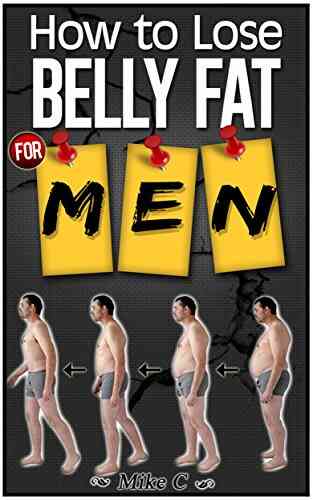
 Fletcher MitchellDiscover the Ultimate Guide on How To Lose Belly Fat For Men and Achieve a...


 Levi PowellDiscover the Exquisite Flame And Shadow Mint Editions: Revolutionizing Women...

 Jacob FosterFollow ·2k
 Ethan MitchellFollow ·13.5k
 Jerry WardFollow ·4.5k
 Donovan CarterFollow ·8k
 Floyd RichardsonFollow ·5.5k
 Gabriel HayesFollow ·8.3k
 Andrew BellFollow ·9.1k
 Roger TurnerFollow ·3.1k

 Dashawn Hayes
Unveiling the Intriguing World of Stephanie Plum, Kate...
Chapter 1: Stephanie Plum – An...

 Colin Richardson
Renegades: The Last Gunfighter 12 - A Heart-Pounding...
Get ready for an action-packed ride as we...

 Emmett Mitchell
The Rainbow Beyond Tears - A Journey of Healing
Have you ever wondered what lies...

 Bret Mitchell
Unveiling the Secrets Beneath the Tell Tale Sky: A...
Have you ever looked up at the sky and...
 Corey Hayes
37 Motivational And Life Changing Lessons From Thich Nhat...
Thich Nhat Hanh is a renowned Zen master,...

 Jace Mitchell
Buy Bullet: An Orphan Short Story
Are you ready to embark on a gripping...

 Branson Carter
Albion Dark Long Poem: An Enchanting Journey into the...
Are you ready to immerse yourself in...

 Jorge Amado
The Hostile Trail Matt Slaughter: A Captivating Journey...
Are you ready to embark on a thrilling...

 Luke Blair
The Adorable Grandma Peek Boo Crochet Pattern 131: Create...
Have you been searching for the perfect...
 Bret Mitchell
The Battle of Corrin: A Turning Point in the Known...
When it comes to pivotal moments in...

 Andres Carter
Little Gnome Home Crochet Pattern - Create Your Own...
Imagine a world where whimsical creatures...

 Bradley Dixon
Terraforming The Atmosphere Of Venus: A Journey Towards...
Are you ready to embark on a journey that...
4.7 out of 5
| Language | : | English |
| File size | : | 3783 KB |
| Text-to-Speech | : | Enabled |
| Screen Reader | : | Supported |
| Enhanced typesetting | : | Enabled |
| X-Ray | : | Enabled |
| Word Wise | : | Enabled |
| Print length | : | 339 pages |
| Lending | : | Enabled |
